Walter Fernough and the Sky Whales: A Multi-Media Fable
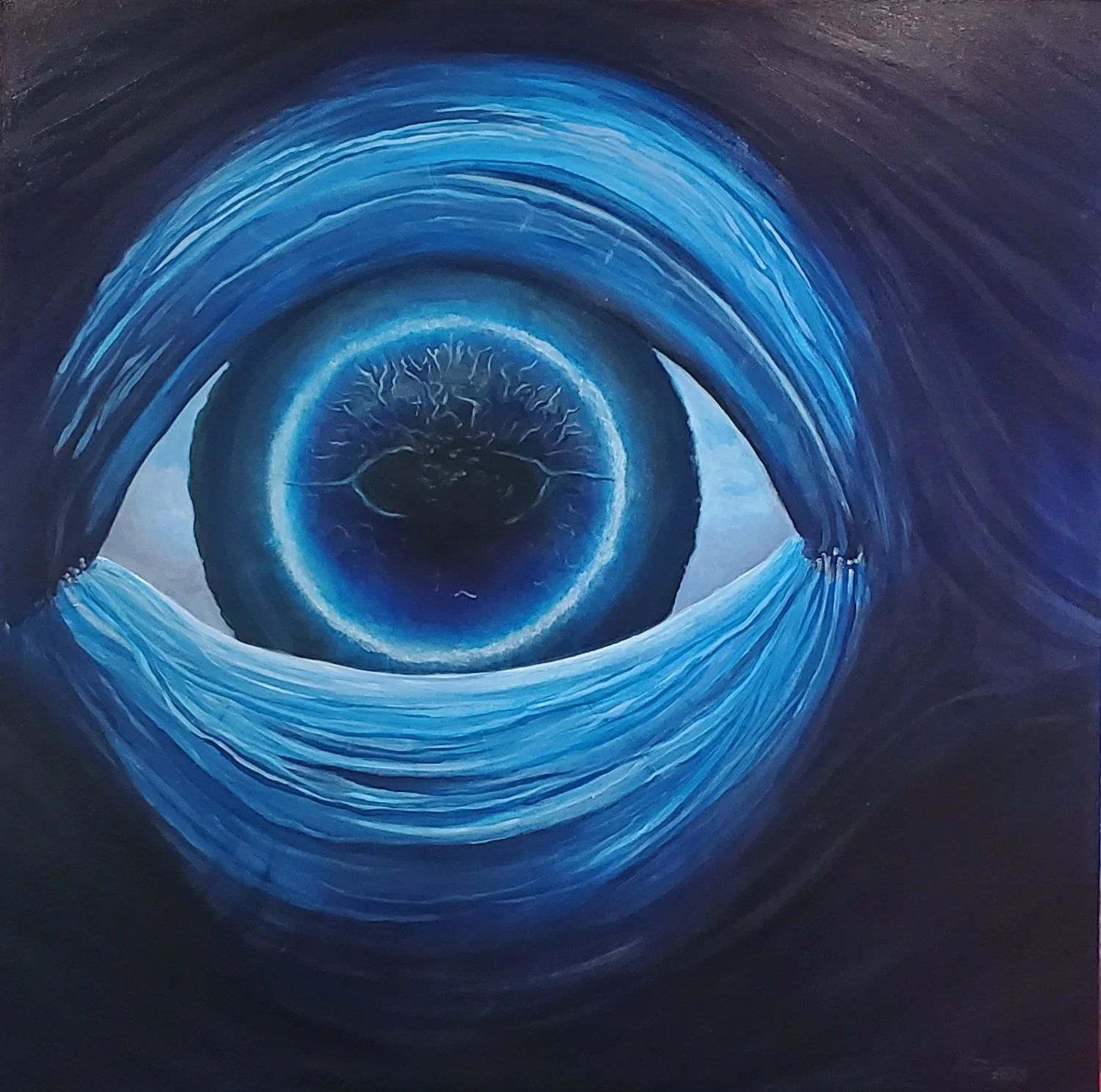
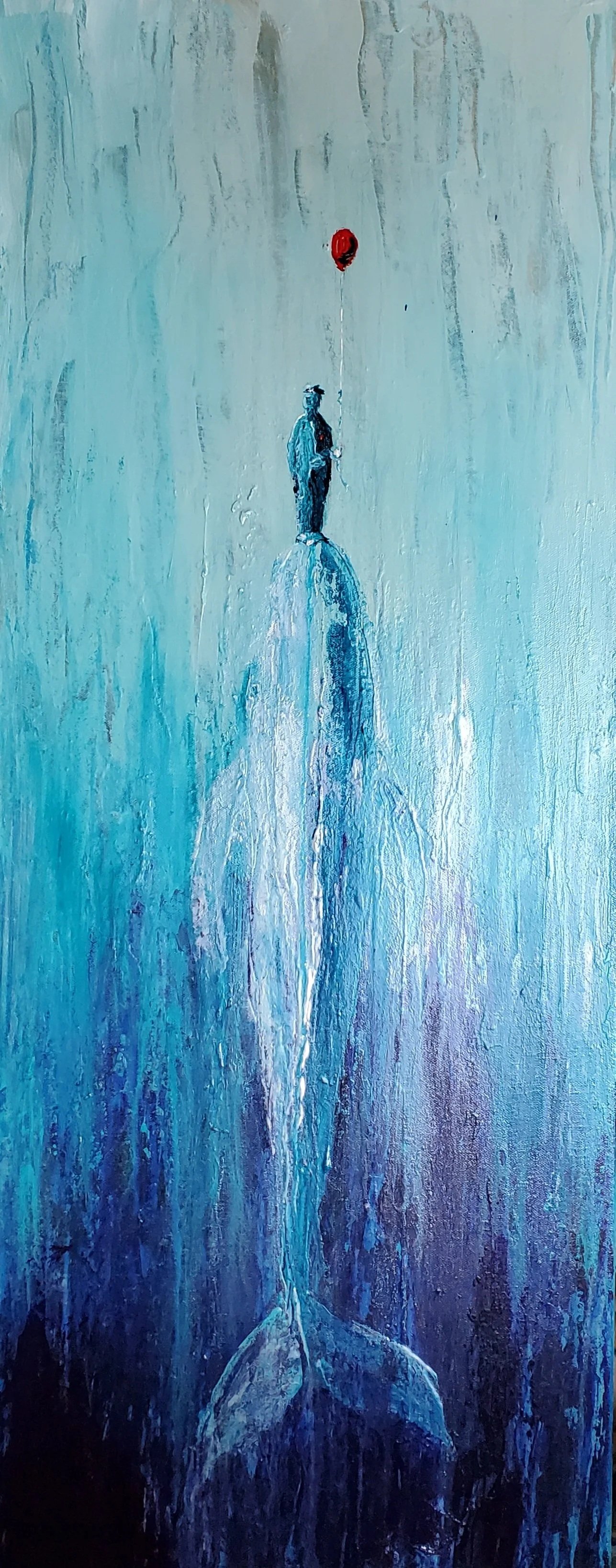
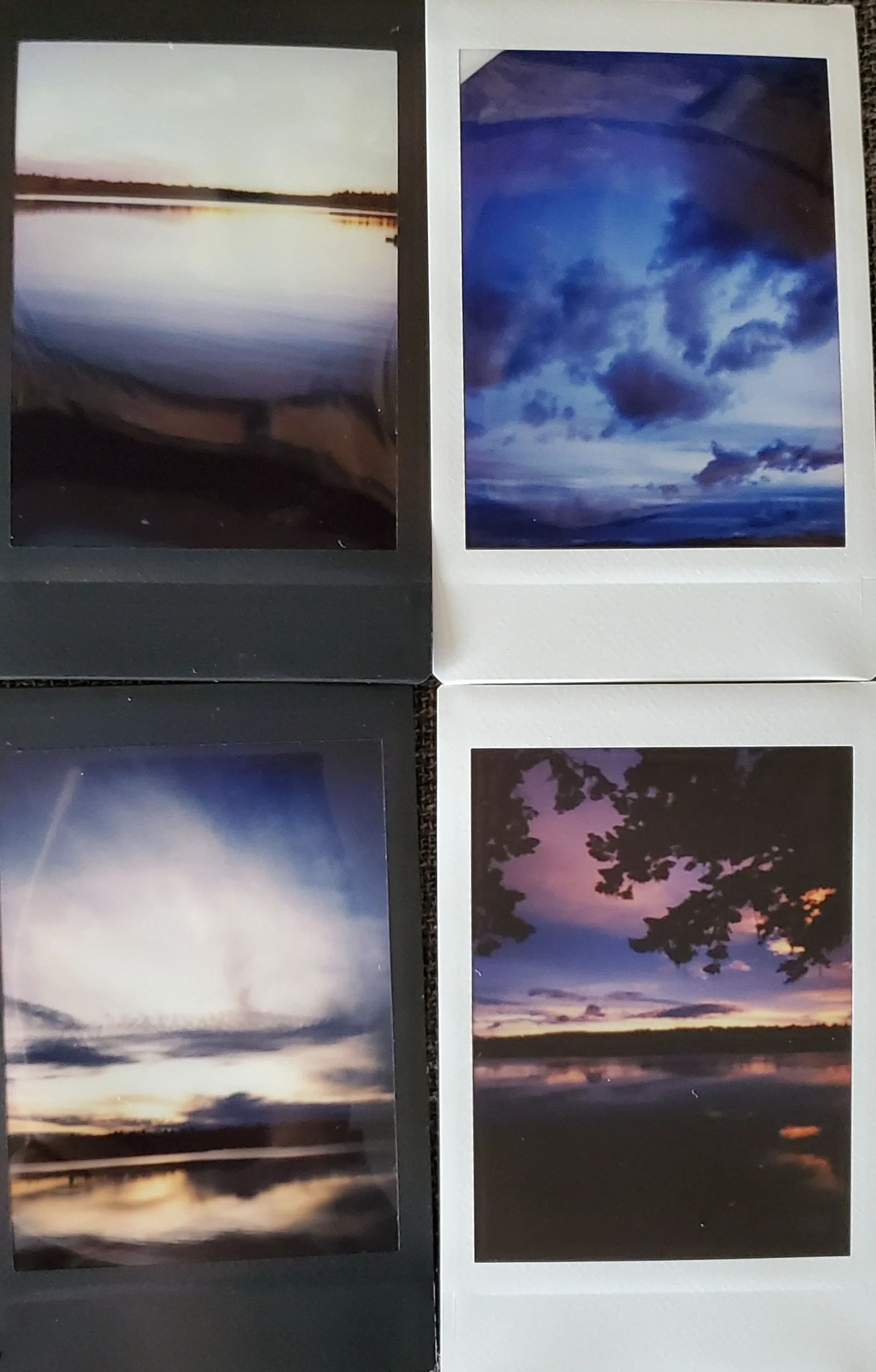
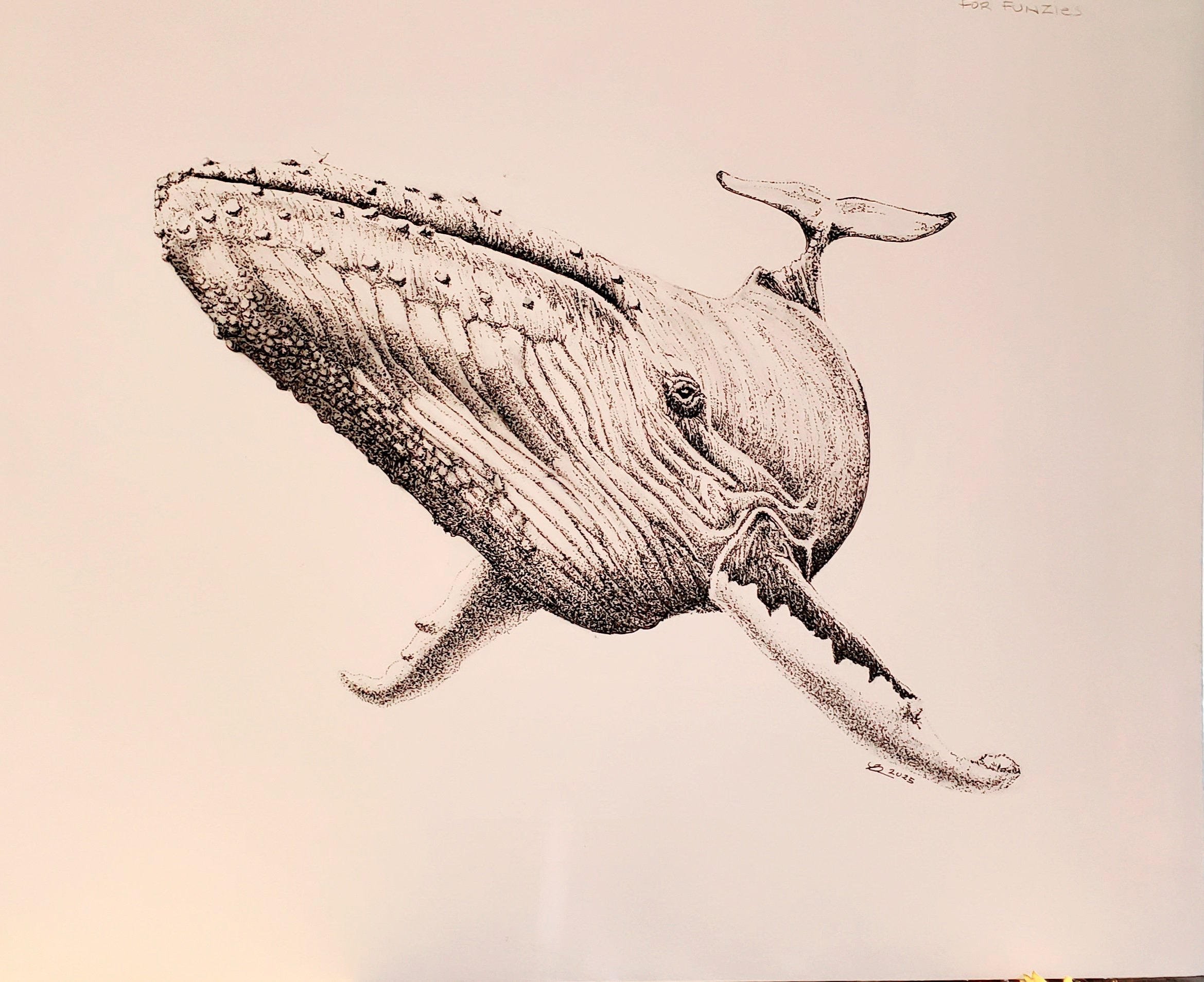
Walter Fernough and the Sky Whales is a multimedia project based on my novel-in-progress, a modern fable and middle-aged bildungsroman that follows Walter Fernough, a 50-something grocery store worker and haphazard cluster ballooner, as he escapes his grey-edged life to find meaning among the people who live on a pod of sky whales as ancient as the universe. He learns how to tether himself to others in a place where “everything human falls.” In addition to the text, the project will feature related artworks—paintings, illustrations, sculptures and a large mosaic portrait of a whale constructed of hundreds of individual instant-camera images of skies and landscape.
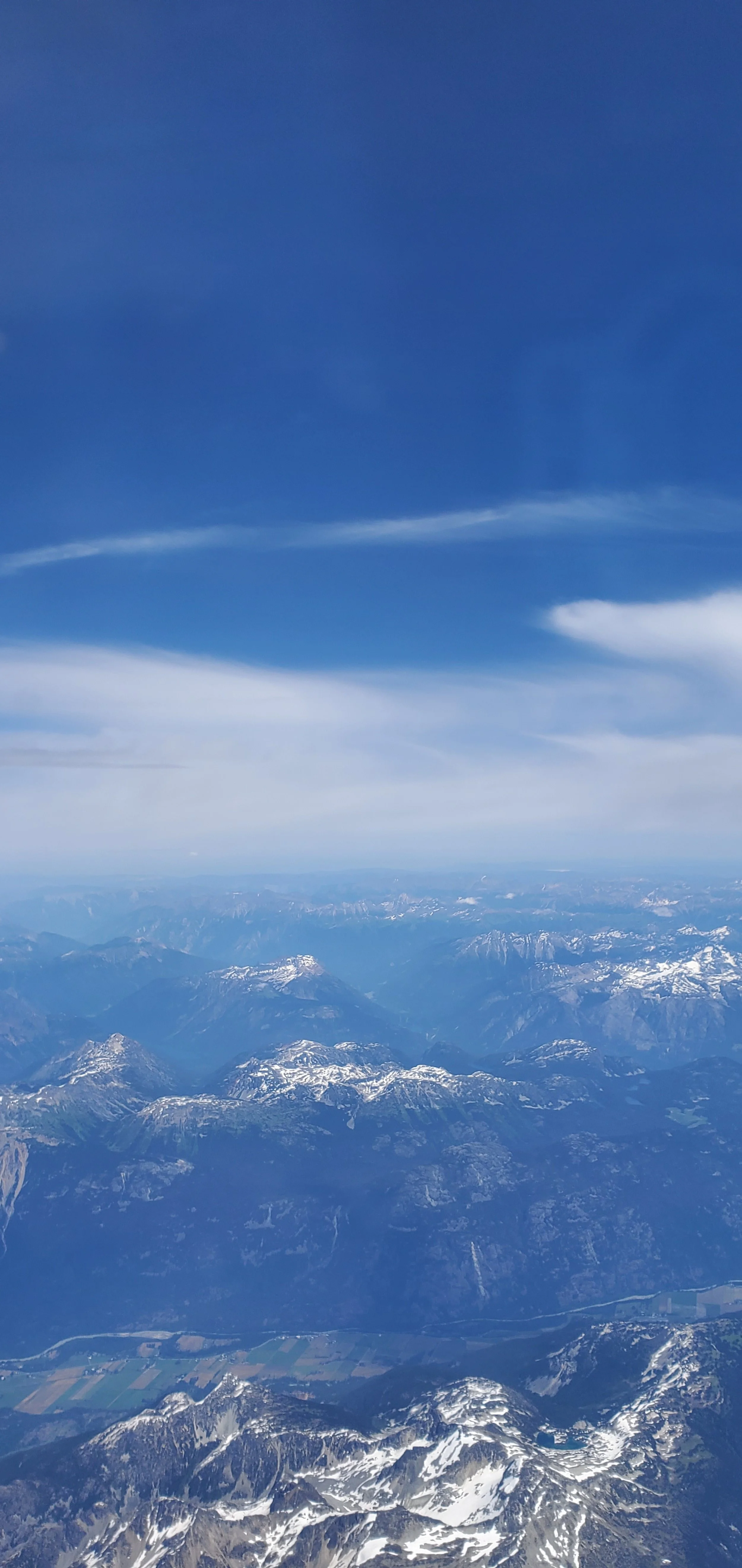
Here you will find a sample of the novel-in-progress along with some of the accompanying artwork I’ve been generating and example sky and land images that will comprise the whale mosaic.
Walter Fernough and the Sky Whales Chapter One
We go, say the sky whales. We go. And they do
+++
Walter Fernough was not a bad person or an exceptionally good one. He was polite to people he liked and to people he didn’t, especially. He did his job at the grocery store and only occasionally got impatient with the old women who insisted on paying in bills folded origamically into their cramped snap-purses. He never made any trouble, never celebrated anything in particular, including birthdays or holidays, never got unreasonably mad when the shopping carts got stuck together or someone started a war somewhere.
His co-workers told the news reporters, after, that Walter didn’t seem like the sort of person who would leap into the sky like that.
But you never know with the quiet ones, right?
Why did he do it, these shenanigans? the news reporters wondered. No one knew, but the co-workers assumed he was… no, they didn’t assume anything about the shenanigans. They didn’t have the habit of thinking about him much, as though he dissipated into a mist when he left the grocery store premises. If they assumed anything about Walter Fernough it was that he could always be counted on to come in on his day off to cover for someone who had something better to do. But instead, he was in the sky. Rude, they said to the reporters. Rude, the reporters reported.
+++
It wasn’t such a crack-pot idea, one co-worker told the others who were gathered in the grocery store parking lot. He showed them a Wikipedia entry about cluster ballooning, which was a real thing and not just something from a Disney movie. Oh, said the co-workers, well, that makes this very normal.
Inside their netting, Walter’s 1000 balloons strained against the rope that tethered them to the cart return kiosk. Happy Birthday! said the balloons, and Congratulations Grad! and Just Married! and Baby On Board! All of life’s occasions crowded each other in their yearning toward the delicate blue of the spring-dawn sky.
Walter stood in his baggy mechanic’s coveralls and wrung his goggles in his hands. The name tag on the coveralls said, Joachim, because he’d picked them up used from the Value Village when he went to get the balloons. Walter’s face, round and forgettable in its frizzy halo of thinning mouse-coloured hair, was lit harshly by the lights set up for the staring cameras.
No one was supposed to be here, he told the reporters and the co-workers. He was meant to float away alone in the silence of the early morning.
In the distance, there were sirens. There was probably a law, someone conjectured, prohibiting shenanigans in grocery store parking lots.
No one was supposed to know, Walter said.
Everyone will know, said the reporters.
So, panicked by the unexpected ado, Walter departed with more fanfare and less method than he had counted on, which is why his sack of snacks and cell phone and GPS navigator were still on the ground beside the cart return kiosk when he shrank to a dot against the blue and disappeared.
+++
There isn’t any danger, Walter thinks, as the parking lot recedes away under his feet and the upturned faces of his coworkers and the reporters and the blank eyes of the cameras become cartoonish circles with darker spots where their open mouths are. He can come down any time. All he has to do is to begin popping the balloons one by one and he will gently descend, lower and lower until he alights in a farmer’s field or a forest clearing far away from the city and the grocery store and the cameras and the avid faces of the gawkers in the parking lot, and also the faces of people who are busy going elsewhere and don’t see him at all.
Easy peasy. He just has to poke the balloons with his balloon-poking stick which he got from the janitor’s closet. It had been used to spear trash in the grocery store parking lot but things can be used for other things and now it’s a controlled descent rod.
It’s also still in the parking lot with his other gear. Someone is picking it up right now and making a few Errol Flynn parries and thrusts with it before giving it back to the janitor who is pretty mad about people touching the tools of his trade and pretending they are things that they aren’t.
So maybe controlled descent isn’t really in the cards for Walter Fernough. His stomach does some loop-di-loops and his blood fizzes up into his ears when he realizes that his backpack of food and his controlled descent rod are not attached by carabiners to the aluminum tubes of the floaty pool chaise like they should be. His fingers squeak against the Styrofoam floats of the arm rests as his hands fist up in panic and then relax again.
It’s okay. He can worry about down later. For now, it’s about ascending.
^^^
The world is flat like a map, like corrugated cardboard scored with a packing knife: highways called ‘arteries’ and the roofs of produce distribution centres and the wink-wink-wink of 1000 identical windshields of 1000 identical Ford F150s rolling nose-to-tail off the line. In between, little scribbles of green: a golf course, a baseball diamond, a ravine too steep and deep to build in, its stream gurgling over and around the weed-filled mouth of an upside-down washing machine. Walter can’t see the washing machine. He’s too far now, a bit too far now, he thinks, a jitter behind his ribs and a sizzling in his hands. He can’t see the washing machine or the guppies that live in it or the lost boys and girls of No Daddy Land with their housekeys on lanyards around their necks. He can’t see them all lined up on the banks ready to race their milk carton boats, while above them the highway roars and shudders with the passage of the semis full of apples and car parts and urgency.
He can’t see his balcony or the string of Christmas lights or the bicycle leaning against the rail, but he can see the roof of his apartment building looking just like it did on Google Earth except now without snow. It’s lined up in a row along the banks of the Avenue with the other identical buildings, staring blankly over the road toward a haze of greener green, fields of corn and beans and hip-shot horses leaning away from the grey nibble-nibble of progress.
Around it all, at the edges of his vision, everywhere, the seeping grey. He wishes for wind and lifts his eyes instead to the blue above and the clouds with their dawn-pink bellies and sleepy purple backs and he thinks how much like whales they are, drifting so high that the grey is just distance and the nibble-nibble is not an everything but just something passing. And the morning’s excitement “catches up with him”—it’s been concentrating incrementallyinto a thickness that drapes over him in the gentle light, muffles the jitter and sizzle until, his head resting on the Styrofoam neck-rest of the pool chair and his hands still gripping the aluminum rails, his eyelids slide down and he slides down into pink and then purple and then grey and then darkness.
>>>
The sky whales are gently ponderous, translucent undulations in the blue. They are the yesterday that hangs in your mind, the once-was. The sky whales are the taste of toothpaste. The sky whales are slow neverweres in your peripheral vision like nebulae and the space in your mouth made by a word you can’t remember, the one that rhymes with another word you can’t remember. The sky whales are distant islands that may be clouds or light slicks miraging at the very cusp of the earth. Walter longs to run ashore, pull up his chair onto the wide expanse of a fluke and rest his cheek against the cool not-thereness of their going. They don’t mind. The sky whales have no itinerary. They are only what might have been but wasn’t, what was but won’t be again. The sky whales go. “We go,” they say. “We go.” And they do. They don’t mind if Walter comes along.
Walter Fernough sails among them. He spins pirouettes in the turbulence of their slow-stroking tails, each one as big as a grocery store parking lot, as big as the field where corn grew before the hiccups of rowhouses came. He slides off of one sloping back and skids along another, his heels kicking up a froth of mist as he goes. The balloons bong and squeak in their netting when they are struck by a snout, pushed aside by a long, smooth flank, and back again by another.
The sky whales roll their vast bodies to look at him, each eye an enormous Claude glass, a convex, smooth mirror that shows Walter Fernough himself, a middle-aged man in used coveralls, suspended by a thousand bright wishes, his frizzy hair startled upright in the thinness of the sky, and all around him, the passing whales as delicately colourful and as gossamer thin as the northern lights he knows he saw once and can’t quite call to mind.
He drifts along from whale to whale to whale to whale to whale…
Audio Sample
This is a small audio excerpt from a chapter later in the story, after Walter has started school to learn how to be nimble as he navigates life on the back of a whale.